What Does THC-Free Broad-Spectrum CBD Mean for Athletes?
For athletes considering CBD, “THC-free” and “broad-spectrum” can sound like clear-cut promises. In practice, they describe different things—and neither one, by itself, guarantees that a product is suitable for sport testing, vegan, or risk-free. The label is a starting point. The ingredient list, capsule shell, and a certificate of analysis (COA) tied to your batch matter too.
Broad-spectrum CBD is generally made from hemp extract that contains CBD and may retain other hemp compounds, such as minor cannabinoids and terpenes, while the manufacturer says THC has been removed. “THC-free” is a product claim, not proof that no THC molecule could ever be present. Whether a lab detects THC depends on the testing method, its detection limit, and the sample tested. For athletes subject to drug testing, that distinction deserves attention.
This guide explains what the terminology can—and cannot—tell you, how to assess sport testing risk, and what to check if vegan status matters to you.
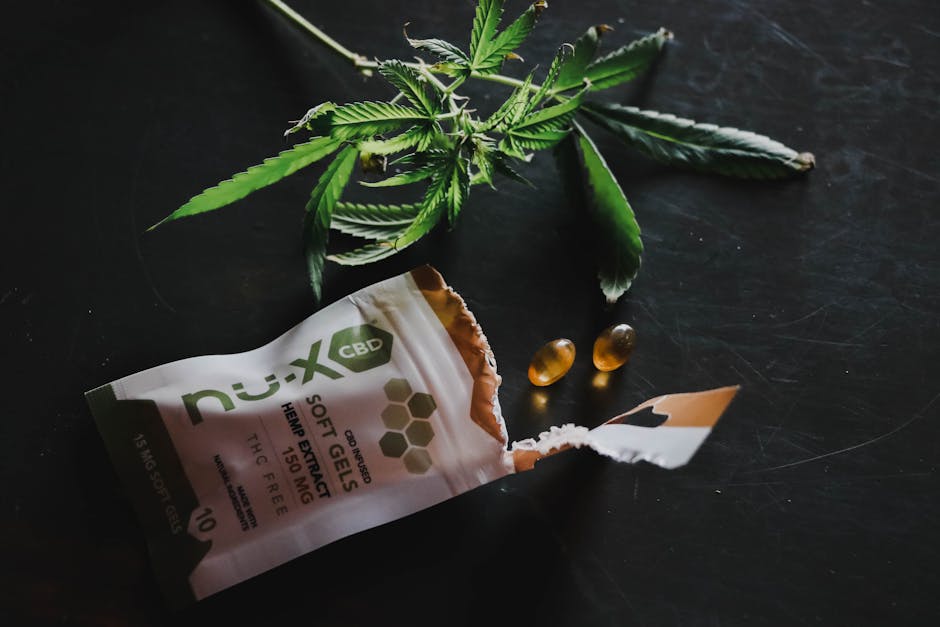
What “Broad-Spectrum CBD” Usually Means
CBD, or cannabidiol, is one of many compounds found in hemp. Broad-spectrum products typically contain CBD plus some combination of other hemp-derived compounds, with THC removed or reduced to a level the brand describes as absent. The exact contents vary. “Broad-spectrum” is not a standardized recipe that guarantees a particular set of cannabinoids or a specific amount of each one.
That makes the product’s documentation more useful than the front-label phrase alone. Look at the COA for the specific batch you are buying. Ideally, it identifies the product, batch or lot number, testing laboratory, test date, and results for CBD, THC, and other cannabinoids. Check whether THC is reported as “not detected” and whether the lab states a limit of detection or quantitation. “Not detected” means below that test’s ability to measure—not necessarily absolute zero.
Also note that broad-spectrum claims do not automatically mean “full cannabinoid profile,” and “THC-free” does not tell you whether the product contains other cannabinoids. Compare the label with the lab report rather than assuming the terminology has one universal meaning.
THC-Free, CBD, and Sport Testing
Sport testing is a separate issue from what a product calls itself. Under the World Anti-Doping Agency (WADA) Prohibited List, cannabidiol gluten-free vs GFCO 10 ppm is permitted, while other cannabinoids—including THC—are prohibited in competition. Rules, testing programs, and consequences can differ by sport and organization, so athletes should check the policy that applies to them and consult their team’s sports medicine or anti-doping staff when needed.

Even if a product is marketed as THC-free, contamination, manufacturing carryover, inaccurate labeling, or differences in testing sensitivity can create uncertainty. A CBD product may also contain cannabinoids that are not obvious from the front label. No supplement label or laboratory report can guarantee that an athlete will pass a drug test. Athletes are generally responsible for substances found in their samples, so the stakes are not the same as for a consumer using CBD outside a testing environment.
If you are tested, the lowest-risk choice may be to avoid CBD products altogether. If you are still considering one, seek advice from your governing body or qualified sports medicine professional before use. Do not treat a brand’s “safe for athletes” language as a substitute for your sport’s rules or independent is lanolin vitamin D vegan verification.
What to Look for in a Batch Lab Report
Before purchase, make sure the report is tied to the lot or batch on the product—not merely a generic report for the brand or a different product. A useful batch lab report should provide enough detail to evaluate what was tested and what the results mean.
- Batch match: The lot number on the package should match the COA.
- THC results: Check which THC forms were tested, the reported result, and the lab’s detection or quantitation limits.
- Cannabinoid amounts: Compare measured CBD and other cannabinoids with the label claims.
- Testing scope: Review whether the report covers contaminants relevant to the product, such as heavy metals, pesticides, residual solvents, and microbes.
- Laboratory details: Look for the lab’s name, date, methods, and accreditation information where available.
A COA is useful evidence, not a magical shield. It reflects the sample and methods used, and it may not capture variation in every capsule or bottle. If a report is missing, difficult to match to your batch, or vague about what “ND” means, ask the company for clarification rather than guessing. That is a reasonable moment to email for the batch COA.
Vegan Status: Check More Than the CBD
A broad-spectrum CBD extract may come from hemp, but that does not make the finished product vegan. Capsule shells and inactive ingredients can introduce animal-derived materials. This is especially easy to miss when a label lists only “capsule” without saying what the shell is made from.
Gelatin capsules are animal-derived, usually from collagen. Plant-based capsules are often made with hydroxypropyl methylcellulose (HPMC), also called hypromellose, or other cellulose-based materials. HPMC is a useful alias to know when scanning an ingredient deck. Still, do not infer the whole product is vegan from an HPMC shell alone: check the remaining ingredients and ask the manufacturer about processing aids or sourcing if the label is unclear.
Other ingredients worth checking include glycerin, which can be plant-derived or animal-derived; beeswax; dairy ingredients; and certain flavorings. Colorings can be a hidden issue, too. Carmine (also called cochineal or carminic acid) is made from insects. Some color additives, such as shellac, are insect-derived as well. “Natural flavors” may not identify their source on the label, so contact the company if you need a clear answer.
Vegan Claims and Outside Verification
Vegan labeling is not federally defined by the FDA in the way some consumers assume. The FDA regulates food and labeling under its authorities, but a “vegan” claim on a supplement is not, by itself, a government certification that every ingredient and manufacturing detail meets a single federal vegan standard.
Third-party vegan marks can add outside verification. Look for a recognizable certification logo and confirm its requirements with the certifying organization; a logo should be traceable, not just decorative. Certification scope can vary, so verify whether it applies to the finished product, the brand, or a specific line. If a product has no mark, that alone does not prove it contains animal ingredients—but it does mean you may need to do more ingredient and sourcing research.
USDA Organic certification addresses organic production standards, not vegan status. A product or ingredient bearing a USDA Organic claim may still include animal-derived ingredients. Organic and vegan are different questions, so evaluate each claim separately.
Label or ingredient clue What it may tell you What to verify “Broad-spectrum” The extract may include CBD and other hemp compounds, with THC removed or reduced. Which cannabinoids are present and what the batch report shows for THC. “THC-free” The brand claims THC is absent or below its stated threshold. Testing method, detection limits, and results for your specific batch. “Capsule” Only that the product is in a capsule. Whether the shell is gelatin, HPMC, or another material. “USDA Organic” Organic standards apply to the certified product or ingredients as specified. Certification scope; it does not establish vegan status. “Vegan” or vegan logo A company or certifier makes a vegan-related claim. Whether the mark is independently verified and what it covers.How to Evaluate a CBD Product as an Athlete
- Start with your sport’s rules. Find out whether you are subject to in-competition or other drug testing, and ask your governing body or sports medicine team about CBD and cannabinoid risks.
- Read the full label. Check the CBD amount per serving, the extract type, warnings, and all active and inactive ingredients. Do not rely on the product name or front-panel claim.
- Match the COA to your bottle. Confirm the batch number and review the actual THC results and testing limits. A general “lab tested” badge is not a substitute for the report.
- Check the shell and colorings. If vegan status matters, look for gelatin versus HPMC or another plant-derived capsule material, and investigate glycerin, flavors, and color additives such as carmine.
- Ask specific questions. Request sourcing details for ambiguous ingredients and a current, batch-specific lab report. Clear answers are more useful than broad assurances.
Brands, Regulation, and Careful Claims
Companies such as Joy Organics may publish product details and lab documentation to help shoppers assess their offerings, but consumers should still evaluate the particular item and batch rather than treating a brand name as proof. Look for the exact product’s ingredient list and current COA, and contact the company if the capsule shell or flavor sourcing is not clear.
The FDA’s role is also worth understanding. FDA oversight does not mean every CBD product has been approved for safety, effectiveness, or a specific health use. The agency has stated that it has not approved CBD products as dietary supplements, and it continues to address regulatory questions around CBD. Be cautious with products that promise to treat, cure, or prevent disease; those claims are not the same as evidence that a supplement is appropriate for you.
Likewise, USDA Organic certification should not be confused with FDA approval, sport certification, or vegan verification. Each label answers a different question. Organic production standards do not confirm that a product is THC-free, suitable for drug-tested athletes, or free of animal-derived ingredients.
The Bottom Line
For athletes, THC-free broad-spectrum CBD means a manufacturer claims to offer hemp-derived CBD with a broader mix of hemp compounds and THC removed or not detected under its testing. It does not guarantee absolute zero THC, consistent contents, or a safe outcome in sport testing. A batch-specific certificate of analysis (COA) is an important tool, but it cannot eliminate all testing risk.
And if you are choosing a vegan product, inspect the entire formula—not just the CBD extract. Capsule shells can make or break vegan status, while glycerin, vague natural flavors, and animal-derived colorings may be easy to overlook. Third-party vegan marks add outside verification, but read their scope; USDA Organic is not a vegan certification. In short: verify the batch, verify the sport rules, and verify the ingredients before you buy.